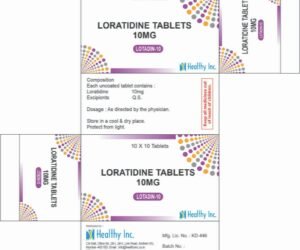
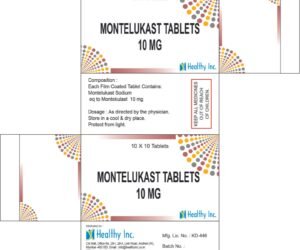
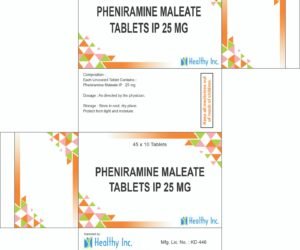
An antihistamine is a pharmacological agent designed to inhibit the physiological effects of histamine, a biogenic amine involved in local immune responses, gastric acid secretion, and neurotransmission. In clinical practice, antihistamines are primarily used to treat allergic rhinitis, urticaria (hives), and acid-related gastrointestinal disorders.
1. Mechanism of Action: H1 vs. H2 Blockers
Antihistamines are classified by the specific receptor they target. While four histamine receptors exist ($H_{1}$ to $H_{4}$), the pharmaceutical industry focus is predominantly on $H_{1}$ and $H_{2}$.
H1 Antagonists (Allergy Focus): These act as inverse agonists that stabilize the inactive form of the $H_{1}$ receptor. By blocking histamine from binding in the airways, skin, and blood vessels, they prevent vasodilation and capillary permeability (swelling/redness).
H2 Antagonists (Gastric Focus): These target receptors on the parietal cells of the stomach lining. By blocking histamine, they inhibit the signal to produce hydrochloric acid ($HCl$), making them essential for treating GERD and peptic ulcers.
2. Generations of H1 Antihistamines
The evolution of $H_{1}$ blockers is defined by their ability to cross the blood-brain barrier (BBB).
| Generation | Key Characteristic | Common Examples |
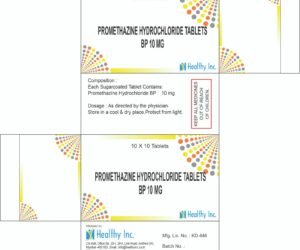
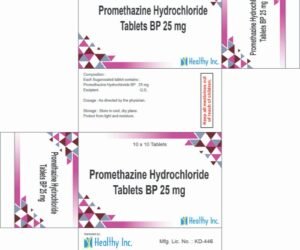
| First Generation | Lipophilic; crosses the BBB. Highly sedating with anticholinergic side effects. | Diphenhydramine, Chlorpheniramine, Promethazine. |
| Second Generation | Larger, less lipophilic; does not readily cross the BBB. Non-sedating. | Cetirizine, Loratadine, Fexofenadine. |
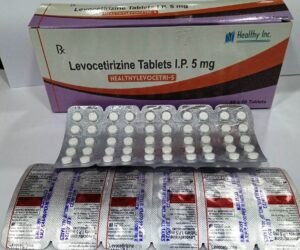
| Third Generation | Active metabolites or enantiomers of 2nd gen; improved safety and potency. | Levocetirizine, Desloratadine. |
3. Significance of Antihistamine Manufacturing in India (2026)
As of 2026, the global antihistamine market has surpassed $27 Billion, with India serving as the primary production hub for both APIs and finished dosages.
Shift to Advanced Topicals: Indian manufacturers are leading a 2026 trend toward “Non-Systemic” delivery. This includes high-potency Antihistamine Nasal Sprays and Ophthalmic Drops (e.g., Olopatadine) that treat localized allergies without any systemic absorption.
Combination Therapy Excellence: Indian CDMOs have mastered the formulation of Fixed-Dose Combinations (FDCs), such as Antihistamine + Montelukast or Antihistamine + Steroid sprays, which provide superior relief for chronic allergic asthma.
Pediatric-First Formulations: India is the top exporter of “Melt-in-mouth” (MD) antihistamine tablets and fruit-flavored oral liquids, ensuring high compliance among pediatric patients globally.
H2 Blocker Stability: While PPIs are common, Indian plants continue to lead in the production of high-purity Famotidine and Nizatidine, which are seeing a resurgence in 2026 for on-demand acid relief due to their rapid onset.
4. Why Healthy Inc. is Your Strategic Sourcing Partner
Sourcing antihistamines requires a partner who understands the technical balance between rapid onset and long-term safety. Healthy Inc. acts as your professional bridge:
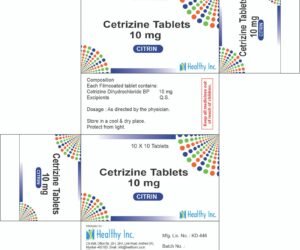
Strategic Sourcing Hub: We are associated with multiple state-of-the-art manufacturing units specializing in Clean-Room semi-solids and liquids. Whether you need high-volume Cetirizine tablets or specialized Anti-itch gels, we match you with the right facility.
Pharmacist-Led Technical Vetting: We provide “straight answers” on pharmacokinetics and impurity profiles (such as NDMA-free testing for H2 blockers). Our team ensures every batch meets the highest WHO-GMP standards for purity.
Regulatory & Dossier Mastery: We simplify international trade by providing full CTD/ACTD dossiers, stability data for all global climate zones, and bioequivalence reports required for registration.
Custom Branding (OEM): Through our associated network, we offer flexible private labeling options, allowing you to launch high-quality allergy brands with customized delivery formats like fast-dissolving strips or metered-dose sprays.
Showing all 20 results