An antihistamine is a pharmacological agent designed to inhibit the physiological effects of histamine, a biogenic amine involved in local immune responses, gastric acid secretion, and neurotransmission. In clinical practice, antihistamines are primarily used to treat allergic rhinitis, urticaria (hives), and acid-related gastrointestinal disorders.
1. Mechanism of Action: H1 vs. H2 Blockers
Antihistamines are classified by the specific receptor they target. While four histamine receptors exist ($H_{1}$ to $H_{4}$), the pharmaceutical industry focus is predominantly on $H_{1}$ and $H_{2}$.
H1 Antagonists (Allergy Focus): These act as inverse agonists that stabilize the inactive form of the $H_{1}$ receptor. By blocking histamine from binding in the airways, skin, and blood vessels, they prevent vasodilation and capillary permeability (swelling/redness).
H2 Antagonists (Gastric Focus): These target receptors on the parietal cells of the stomach lining. By blocking histamine, they inhibit the signal to produce hydrochloric acid ($HCl$), making them essential for treating GERD and peptic ulcers.
2. Generations of H1 Antihistamines
The evolution of $H_{1}$ blockers is defined by their ability to cross the blood-brain barrier (BBB).
| Generation | Key Characteristic | Common Examples |
| First Generation | Lipophilic; crosses the BBB. Highly sedating with anticholinergic side effects. | Diphenhydramine, Chlorpheniramine, Promethazine. |
| Second Generation | Larger, less lipophilic; does not readily cross the BBB. Non-sedating. | Cetirizine, Loratadine, Fexofenadine. |
| Third Generation | Active metabolites or enantiomers of 2nd gen; improved safety and potency. | Levocetirizine, Desloratadine. |
3. Significance of Antihistamine Manufacturing in India (2026)
As of 2026, the global antihistamine market has surpassed $27 Billion, with India serving as the primary production hub for both APIs and finished dosages.
Shift to Advanced Topicals: Indian manufacturers are leading a 2026 trend toward “Non-Systemic” delivery. This includes high-potency Antihistamine Nasal Sprays and Ophthalmic Drops (e.g., Olopatadine) that treat localized allergies without any systemic absorption.
Combination Therapy Excellence: Indian CDMOs have mastered the formulation of Fixed-Dose Combinations (FDCs), such as Antihistamine + Montelukast or Antihistamine + Steroid sprays, which provide superior relief for chronic allergic asthma.
Pediatric-First Formulations: India is the top exporter of “Melt-in-mouth” (MD) antihistamine tablets and fruit-flavored oral liquids, ensuring high compliance among pediatric patients globally.
H2 Blocker Stability: While PPIs are common, Indian plants continue to lead in the production of high-purity Famotidine and Nizatidine, which are seeing a resurgence in 2026 for on-demand acid relief due to their rapid onset.
4. Why Healthy Inc. is Your Strategic Sourcing Partner
Sourcing antihistamines requires a partner who understands the technical balance between rapid onset and long-term safety. Healthy Inc. acts as your professional bridge:
Strategic Sourcing Hub: We are associated with multiple state-of-the-art manufacturing units specializing in Clean-Room semi-solids and liquids. Whether you need high-volume Cetirizine tablets or specialized Anti-itch gels, we match you with the right facility.
Pharmacist-Led Technical Vetting: We provide “straight answers” on pharmacokinetics and impurity profiles (such as NDMA-free testing for H2 blockers). Our team ensures every batch meets the highest WHO-GMP standards for purity.
Regulatory & Dossier Mastery: We simplify international trade by providing full CTD/ACTD dossiers, stability data for all global climate zones, and bioequivalence reports required for registration.
Custom Branding (OEM): Through our associated network, we offer flexible private labeling options, allowing you to launch high-quality allergy brands with customized delivery formats like fast-dissolving strips or metered-dose sprays.
Showing all 20 results
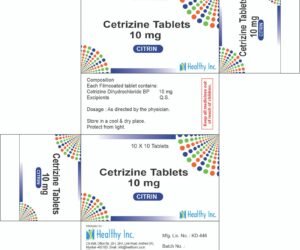
Cetrizine Tablets
FreeProduct Composition & Strength
We supply this product as Film Coated Tablets (White/scored). The tablets are scored to facilitate dose splitting for pediatric use.
Active Ingredient Strength (Standard) Primary Role Cetirizine HCl USP/BP/IP 5 mg Pediatric / Mild Allergy Cetirizine HCl USP/BP/IP 10 mg Standard Adult Dose Excipients Q.S. Lactose Monohydrate / Maize Starch Cyproheptadine Tablets
FreeProduct Composition & Configuration
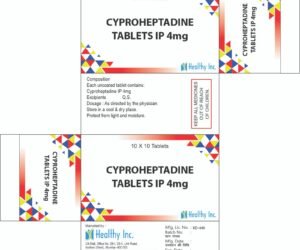
We supply Cyproheptadine Hydrochloride in the globally standardized 4 mg therapeutic dosage configuration, engineered to optimize absorption kinetics and support highly flexible pediatric-to-adult dose fractioning.
Active Ingredient Monograph Calibrated Strength Formulation Delivery Matrix Primary Clinical Application Cyproheptadine Hydrochloride USP / BP / IP 4 mg Oral Solid Immediate-Release Uncoated Tablet Dual-Action Therapy: Alleviation of allergic rhinitis, chronic urticaria, pruritus, and medical management of appetite stimulation / underweight stabilization. Excipients Pharma Grade Lactose Monohydrate, Microcrystalline Cellulose, Maize Starch, Magnesium Stearate The Disintegration Scaffold: High-compressibility matrix optimized to maintain core hardness during transit while facilitating rapid gastric dissolution. Levocetirizine Tablets
FreeProduct Composition & Strength
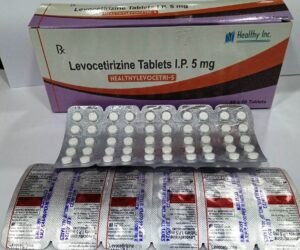
We supply this product as Film Coated Tablets. The small, easy-to-swallow tablets are engineered for rapid disintegration to facilitate quick relief from acute allergic flares.
Active Ingredient Strength (Standard) Therapeutic Role Levocetirizine Dihydrochloride BP/USP 5 mg Potent H1-Receptor Antagonist Excipients Q.S. Microcrystalline Cellulose / Lactose Diluent & Disintegrant Coating Agent Q.S. Opadry® White Protective Film Coating Loratidine Tablet
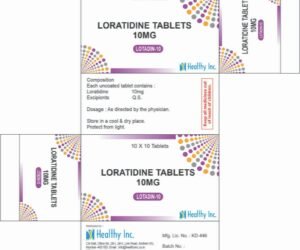
FreeProduct Composition & Available Strengths
We supply Loratadine in the internationally recognized 10 mg therapeutic dosage configuration, optimized for maximum daily compliance and clean absorption kinetics.
Active Ingredient Monograph Calibrated Strength Formulation Delivery Matrix Primary Clinical Application Loratadine USP / BP / IP 10 mg Oral Solid Immediate-Release Uncoated Tablet 24-Hour Allergy Control: Treatment of allergic rhinitis (hay fever), chronic idiopathic urticaria (hives), and ocular allergic reactions. Excipients Pharma Grade Lactose Monohydrate, Corn Starch, Magnesium Stearate The Disintegration Scaffold: Optimized matrix for high mechanical stability during bulk shipping and rapid water-wicking in the gut. Montelukast Tablet
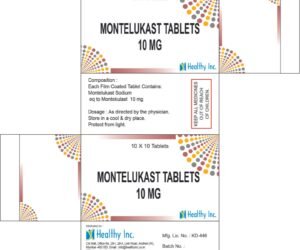
FreeProduct Composition & Strength
We supply this product as Film Coated Tablets for adults (10mg) and Chewable Tablets (4mg/5mg) for pediatric use. The film coating ensures stability against atmospheric moisture.
Active Ingredient Strength (Standard) Therapeutic Role Montelukast Sodium BP/USP 10 mg Leukotriene Receptor Antagonist Excipients Q.S. Lactose Monohydrate / Croscarmellose Sodium Disintegrant & Binder Coating Agent Q.S. Opadry® Beige/Pink Moisture Barrier Film Pheniramine Maleate Injection
FreeProduct Composition & Strength
We supply this product as a Sterile Clear Solution in glass ampoules.
Active Ingredient Strength Total Content (2 ml) Pheniramine Maleate BP/USP 22.75 mg / ml 45.5 mg (per 2 ml Ampoule) Excipients Water for Injection Isotonic Solution *Pack Sizes: Tray of 10 Ampoules, 50 Ampoules, or 100 Ampoules.
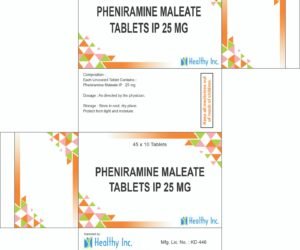
Pheniramine Maleate Tablets
FreePheniramine Maleate Tablets IP 25 mg
Each Uncoated Tablet Contains :
Pheniramine Maleate IP 25 mgPromethazine Injection
FreeProduct Composition & Strength
We supply this product as a Sterile, Clear, Colorless to Faint Yellow Solution in glass ampoules.
Active Ingredient Concentration Total Content & Format Promethazine HCl USP/BP 25 mg / ml 50 mg in 2 ml Glass Ampoule (Standard Dose) Promethazine HCl USP/BP 50 mg / ml 100 mg in 2 ml Glass Ampoule (High Dose) Excipients Disodium Edetate / Sodium Metabisulfite Antioxidant / Preservative System *Pack Sizes: Tray of 10 Ampoules, 50 Ampoules, or 100 Ampoules.
Promethazine Tablets
FreePromethazine Hydrochloride Tablets IP 25 mg
Each Sugarcoated tablet contains :
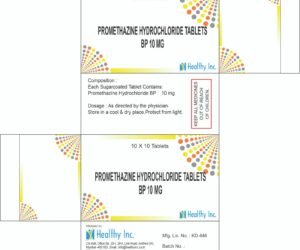
Promethazine Hydrochloride IP 25 mgPromethazine Hydrochloride Tablets BP 10 mg
Each Sugarcoated Tablet Contains:
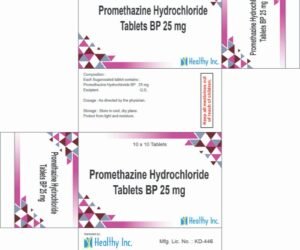
Promethazine Hydrochloride BP 10 mgPromethazine Hydrochloride Tablets BP
Each Sugarcoated tablet contains :
Promethazine Hydrochloride BP 25 mgUsage: – Treat anaphylaxis
Category: – Anti Allergic drugs
Therapeutic category: – Antihistamine, Anti Allergic, Antiemetic, Anti Vomiting
Pcd marketing:-
Manufacturer: – Healthy Life Pharma Pvt Ltd
Exporter: – Healthy Inc
Supplier: – Healthy Life Pharma Pvt Ltd
Healthy Inc
Distributor: – Healthy Life Pharma Pvt Ltd
Healthy Inc
Seller: – Healthy Life Pharma Pvt Ltd
Healthy Inc