Anti-Vomiting Solutions: Advancing Patient Comfort in 2026
In the pharmaceutical world, Anti-vomiting medications—clinically known as Antiemetics—are essential for managing one of the body’s most distressing reflex actions. As of 2026, the global market for these drugs has reached approximately $3.44 billion, driven by the rising need for chemotherapy support, postoperative care, and the management of modern lifestyle-related gastrointestinal issues.
What is Vomiting?
Vomiting (emesis) is the forceful expulsion of stomach contents through the mouth. It is not a disease itself but a sophisticated defense mechanism triggered by the “Vomiting Center” in the medulla oblongata of the brain.
The Trigger Mechanism:
Chemoreceptor Trigger Zone (CTZ): Located outside the blood-brain barrier, it “samples” the blood for toxins (like drugs or poisons).
Gastrointestinal Tract: Sensors in the stomach send signals via the Vagus nerve if they detect irritation or infection.
Vestibular System: Inner ear sensors that detect motion, which can trigger motion sickness.
Key Antiemetic Drug Classes in 2026
In 2026, the focus has shifted toward Combination Therapies and Long-Acting formulations to prevent breakthrough nausea.
| Drug Class | Mechanism | Common Examples | Best Use Case |
| Serotonin (5-HT3) Antagonists | Blocks serotonin signals in the gut and brain. | Ondansetron, Palonosetron | Chemotherapy & Surgery |
| Dopamine Antagonists | Blocks dopamine receptors in the CTZ. | Domperidone, Metoclopramide | Indigestion & Migraines |
| NK1 Receptor Antagonists | Blocks “Substance P” to prevent delayed vomiting. | Aprepitant, Rolapitant | Highly emetogenic chemo |
| H1 Antihistamines | Blocks histamine signals from the inner ear. | Promethazine, Meclizine | Motion Sickness |
| Anticholinergics | Blocks acetylcholine signals in the brain. | Scopolamine (Patches) | Travel & Vertigo |
Significance of Anti-Vomiting Manufacturing in India
India has become the global benchmark for antiemetic production, particularly with the implementation of the Revised Schedule M in early 2026.
IP 2026 Standards: The 10th edition of the Indian Pharmacopoeia (2026) has introduced updated monographs for antiemetics, enforcing stricter limits on impurities and ensuring that generic versions are bioequivalent to innovator drugs.
Innovation in Delivery: 2026 is the year of Non-Invasive Delivery. Indian plants are leading the production of Orally Dissolving Films (ODF) and Transdermal Patches, which are crucial for patients who are actively vomiting and cannot swallow a pill.
Ready-to-Use (RTU) Injectables: There is a massive surge in Indian-manufactured RTU IV bags and pre-filled syringes for hospital use, reducing preparation time in critical care units.
Secondary Demand Surge: Interestingly, the global rise in weight-loss medications (like GLP-1 agonists) has created a secondary “side-effect market,” with India supplying high volumes of OTC anti-nausea treatments to manage medication-induced queasiness.
Why Healthy Inc. is Your Strategic Sourcing Partner
Navigating the 2026 regulatory landscape requires a partner who understands the transition from traditional to advanced manufacturing. Healthy Inc. serves as your technical gateway.
Strategic Sourcing Hub: We are associated with multiple state-of-the-art units that have fully transitioned to the 2026 Revised Schedule M and WHO-GMP standards. We match your specific product—whether it’s a high-potency NK1 antagonist or a specialized pediatric suspension—with the most compliant facility.
Pharmacist-Led Technical Vetting: We provide “straight answers” on In-vitro Dissolution and Stability Data. Our team ensures that the antiemetics you source are effective from the first minute of administration.
Global Dossier Mastery: We provide the full suite of CTD/ACTD dossiers required for international registration, including the latest FDA M4Q(R2) alignment for quality documentation.
Flexible Scale: Through our associated network, we help you source everything from emergency hospital injectables to retail-ready OTC strips, tailored to your market’s preferences.
Showing all 9 results
Metoclopramide Injection
FreeProduct Composition & Strength
We supply this product as a Sterile Isotonic Solution in glass ampoules.
Active Ingredient Strength Volume Metoclopramide HCl USP/BP 5 mg / ml 2 ml Ampoule (Total 10 mg) Metoclopramide HCl USP/BP 5 mg / ml 10 ml Multi-dose Vial Preservative Sodium Metabisulfite Antioxidant *Pack Sizes: Tray of 10 Ampoules, 50 Ampoules, or 100 Ampoules.
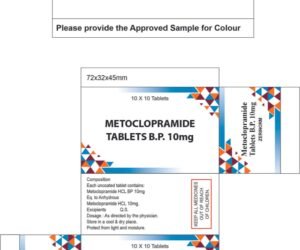
Metoclopramide Tablet
FreeProduct Composition & Packaging Specification
We supply Metoclopramide in the globally standardized therapeutic strength optimized for adult baseline three-times-daily dosage regimens.
Active Ingredient Monograph Calibrated Strength Formulation Delivery Matrix Primary Clinical Function Metoclopramide Hydrochloride USP / BP / IP 10 mg Oral Solid Uncoated Tablet (Scored for micro-dosing titration) The Prokinetic Driver: Accelerates upper gastrointestinal transit and blocks central emetic signals. Excipients Pharma Grade Lactose, Starch, Magnesium Stearate The Core Scaffold: High-solubility matrix engineered for rapid physical disintegration. Ondansetron Injection
FreeProduct Composition & Strength
We supply this product as a Sterile, Clear, Aqueous Solution in glass ampoules or vials.
Active Ingredient Concentration Total Content & Format Ondansetron (as HCl Dihydrate) 2 mg / ml 4 mg in 2 ml Glass Ampoule Ondansetron (as HCl Dihydrate) 2 mg / ml 8 mg in 4 ml Glass Ampoule Excipients Citric Acid / Sodium Citrate pH Buffer System (pH 3.3 to 4.0) *Pack Sizes: Tray of 5/10 Ampoules or Box of 50 Ampoules.
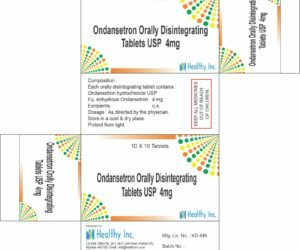
Ondansetron Orally Disintegrating Tablets
FreeProduct Composition & Available Formats
We supply Ondansetron ODT in the two primary compendial configurations required to support initial introductory pediatric dosing up to high-potency surgical and oncological maintenance regimens.
Active Ingredient Monograph Available Strengths Formulation Delivery Matrix Primary Clinical Application Ondansetron Base / Hydrochloride USP / BP / IP 4 mg Fast-Dispersing Hydrophilic Matrix (ODT) Pediatric & General Antiemetic: First-line baseline dosing for acute gastroenteritis, pediatric oncology protocols, and mild post-operative nausea. Ondansetron Base / Hydrochloride USP / BP / IP 8 mg Fast-Dispersing Hydrophilic Matrix (ODT) High-Potency Emetic Control: Advanced strength engineered for highly emetogenic chemotherapy cycles, abdominal radiation protocols, and immediate post-surgical recovery fields. Ondansitron Tablets
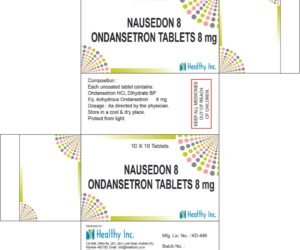
FreeProduct Composition & Strength
We supply this product as a Precision-Engineered Flash-Dispersion ODT or Standard Film-Coated Tablet, packed exclusively in highly secure, moisture-resistant peelable Alu-Alu blister strips to ensure the absolute chemical stability of the highly hygroscopic ODT matrix.
Active Ingredient Strength Primary Clinical Function Ondansetron (as HCl Dihydrate) Ph.Eur./USP 4 mg (ODT / FCT) Pediatric & PONV Standard: Base therapeutic unit for post-operative nausea, severe pediatric gastroenteritis, and mild emetic triggers. Ondansetron (as HCl Dihydrate) Ph.Eur./USP 8 mg (ODT / FCT) Global Oncology Standard: High-dose adult maintenance therapy for highly emetogenic chemotherapy (CINV) and radiation therapy (RINV). Excipients (ODT Formulation) Mannitol / Crospovidone / Aspartame / Colloidal Silicon Dioxide / Premium Mint Flavoring Lyophilized Matrix / Superdisintegrant / Sweetener / Saliva-Stimulating Flavor (Engineered specifically to draw saliva into the tablet matrix, forcing a violent, sub-5-second structural collapse on the tongue without a bitter aftertaste) *Pack Sizes: 10×10 Peelable Alu-Alu Blisters (Optimized specifically for strict oncology and surgical dispensing regimens).
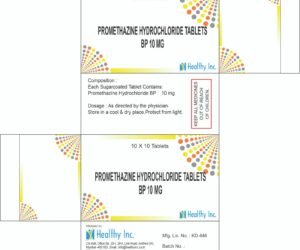
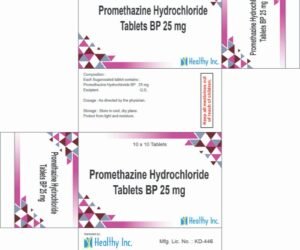
Promethazine Tablets
FreePromethazine Hydrochloride Tablets IP 25 mg
Each Sugarcoated tablet contains :
Promethazine Hydrochloride IP 25 mgPromethazine Hydrochloride Tablets BP 10 mg
Each Sugarcoated Tablet Contains:
Promethazine Hydrochloride BP 10 mgPromethazine Hydrochloride Tablets BP
Each Sugarcoated tablet contains :
Promethazine Hydrochloride BP 25 mgUsage: – Treat anaphylaxis
Category: – Anti Allergic drugs
Therapeutic category: – Antihistamine, Anti Allergic, Antiemetic, Anti Vomiting
Pcd marketing:-
Manufacturer: – Healthy Life Pharma Pvt Ltd
Exporter: – Healthy Inc
Supplier: – Healthy Life Pharma Pvt Ltd
Healthy Inc
Distributor: – Healthy Life Pharma Pvt Ltd
Healthy Inc
Seller: – Healthy Life Pharma Pvt Ltd
Healthy Inc